
Welding machine guides
Duty cycle, power type and spares availability are what decide whether a welder holds up to daily site work.
Read the welding guide →Independent guides for tradespeople choosing workshop and site machinery, built to help you judge whether a machine will still be doing the job in three years.
See the generator buying guides See the garage equipment buying guidesEach guide works through what a machine is actually asked to do over years of daily use.
Duty cycle, power type and spares availability are what decide whether a welder holds up to daily site work.
Read the welding guide →kVA sizing, fuel type and run time under real load are what separate a generator that copes from one that doesn't.
Read the generator guide →Lifts, compressors and diagnostic kit weighed on serviceability and years of daily use.
Read the garage equipment guide →A spec sheet tells you what a machine can do under test conditions. It does not tell you whether that machine will hold up to your working pattern, or whether the extra money buys something you will actually use.
Two machines can carry near-identical numbers and still suit very different working lives. A generator rated for a given output on the box may be running an angle grinder and a site radio while charging tools off a van, and that mix of loads behaves nothing like the single steady load the rating was tested against. The question worth asking is what it can do every working day for years.
Manufacturers publish the figures that flatter the machine and leave the rest to be found out on site. Duty cycle, IP rating and phase requirements are usually printed somewhere, but what they mean under load, in cold weather, or off a domestic supply rarely gets spelled out next to them. The guide on duty cycle is worth reading before you buy a welder.
A machine is only as useful as the parts you can get for it three years in. Some manufacturers supply directly and keep stock moving; others rely on a thin network that leaves you waiting weeks for a part that costs very little. That difference rarely shows up when the machine is new. It shows up the first time it breaks.
New and updated guides as they go up, across welding, generators and the rest.
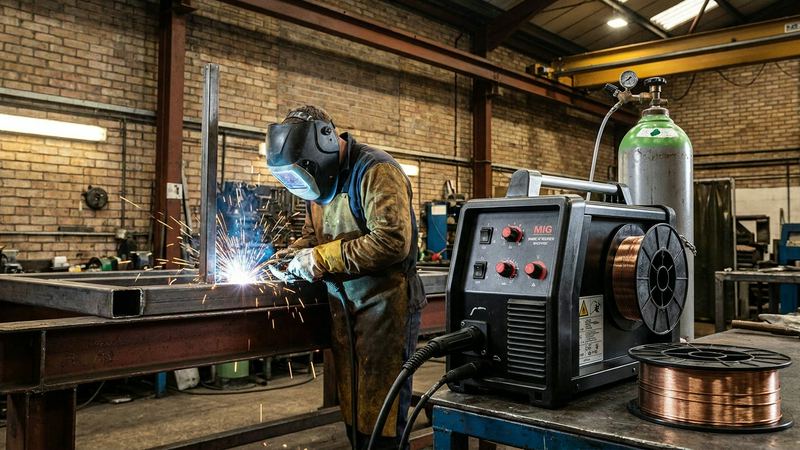
Which MIG welder to buy for professional site and workshop use in the UK — duty cycle, output range, gas vs gasless, and when the budget machine is genuinely enough.
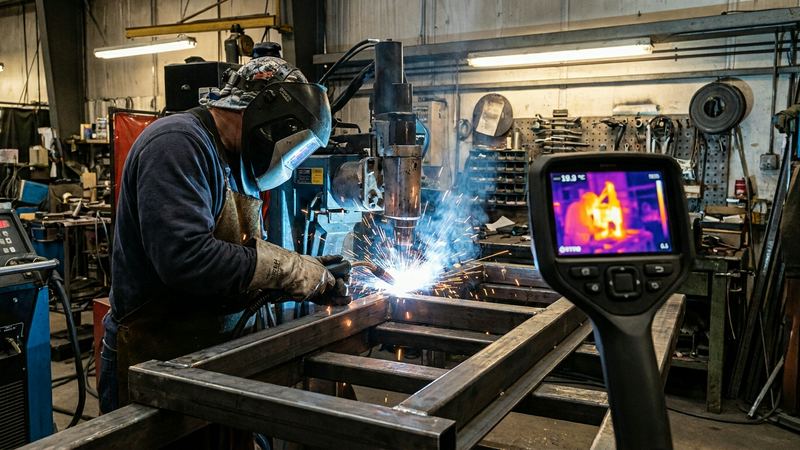
What welding duty cycle really means under working conditions, how manufacturers measure it, why the figure on the box rarely matches the job, and how to read it honestly.
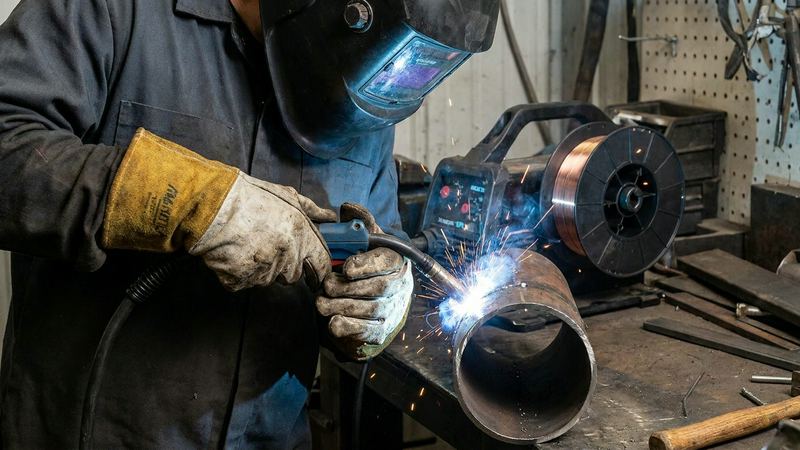
An honest guide to gasless MIG welding for UK tradespeople — where flux-cored wire is the right choice, where it is a false economy, and what the weld quality trade-off actually looks like.
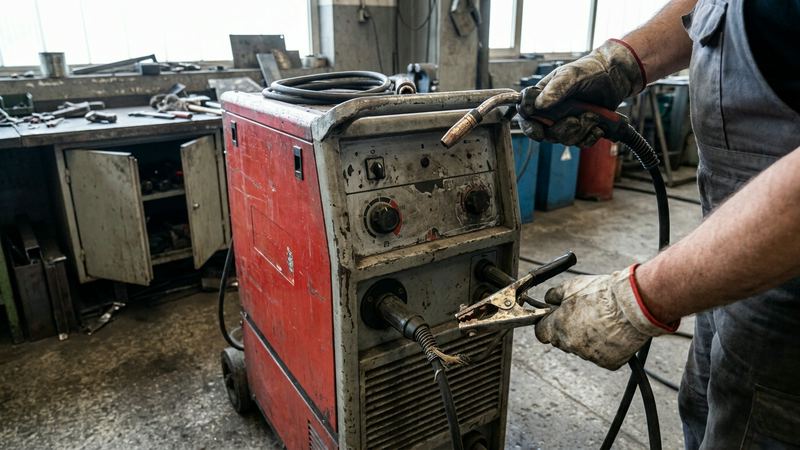
What to inspect before buying a used welding machine in the UK — which types hold up, where the risk lies, what a worn-out machine looks like, and when new is the only sensible option.
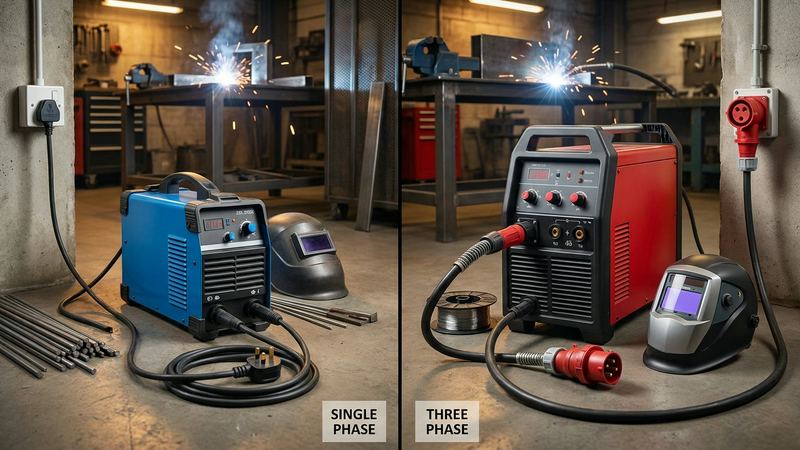
Single phase or three phase welder — what each gives you, what the real output limits are on 13A and 16A supplies, and when three phase is genuinely necessary for trade welding.
Duty cycle, gasless versus gas-shielded, and what the spec sheet leaves out, worked through for the machines tradespeople actually buy.