
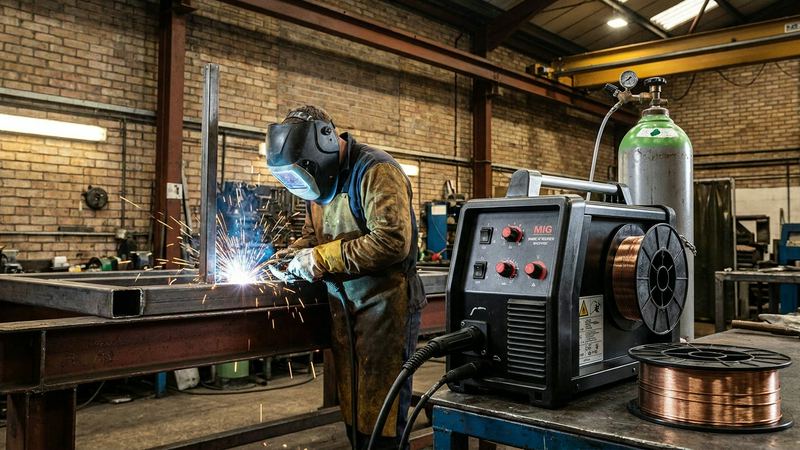
MIG Welder Buying Guide for UK Tradespeople
Which MIG welder to buy for professional site and workshop use in the UK — duty cycle, output range, gas vs gasless, and when the budget machine is genuinely enough.
Guides for tradespeople buying a MIG, TIG or stick welder for daily site and workshop work, covering what the specs mean, where the money is well spent and where it isn't.
Start with the MIG welder buying guide See what duty cycle actually means for your machineThe duty cycle, IP rating and output figures quoted in these guides come from the manufacturer's own datasheet for that model. A datasheet can still go out of date when a manufacturer updates a range, so it's worth checking the current one for a specific model before you commit money to it.
Duty cycle is the share of a ten-minute period a welder can actually run before it needs to cool, and it gets treated as the main test here because it's what separates a machine built for occasional repairs from one built to run through a working day. Amperage, features and price get weighed up afterwards, once duty cycle has ruled a machine in or out for the pattern of work it's being bought for. Duty Cycle Explained sets out how that figure is arrived at and where it can be misread.
Where a guide points you towards a price, it links through to the retailer's own listing with the date it was checked. Machinery prices move, and a live listing gets you closer to what you'll actually pay than anything written down weeks earlier.
For a mobile welder choosing a first inverter, a garage weighing MIG against TIG, or anyone about to buy a used machine off a stranger.
Which MIG welder to buy for professional site and workshop use in the UK — duty cycle, output range, gas vs gasless, and when the budget machine is genuinely enough.
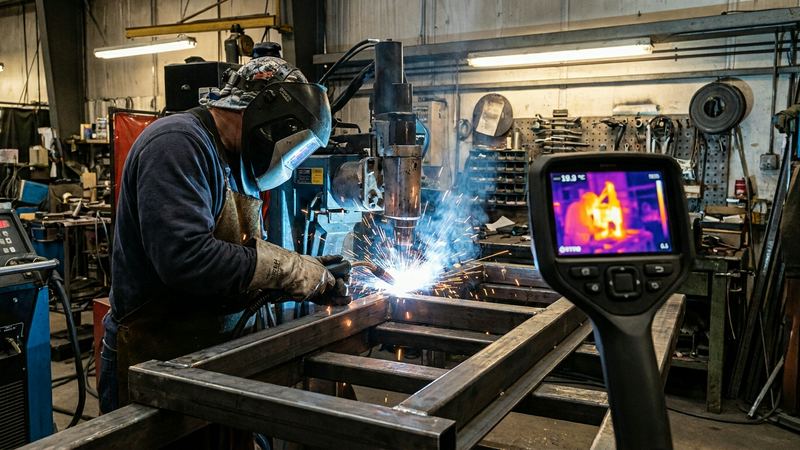
What welding duty cycle really means under working conditions, how manufacturers measure it, why the figure on the box rarely matches the job, and how to read it honestly.
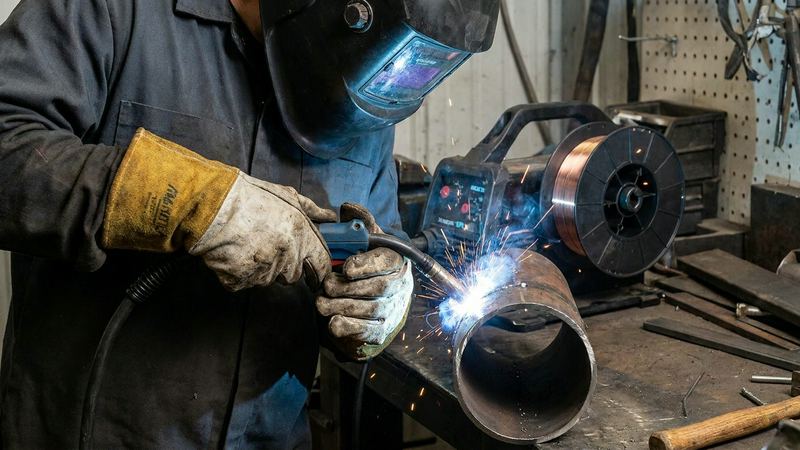
An honest guide to gasless MIG welding for UK tradespeople — where flux-cored wire is the right choice, where it is a false economy, and what the weld quality trade-off actually looks like.
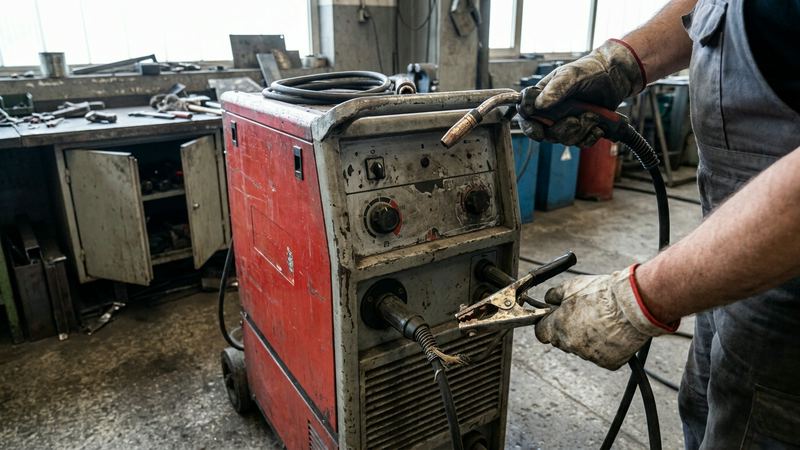
What to inspect before buying a used welding machine in the UK — which types hold up, where the risk lies, what a worn-out machine looks like, and when new is the only sensible option.
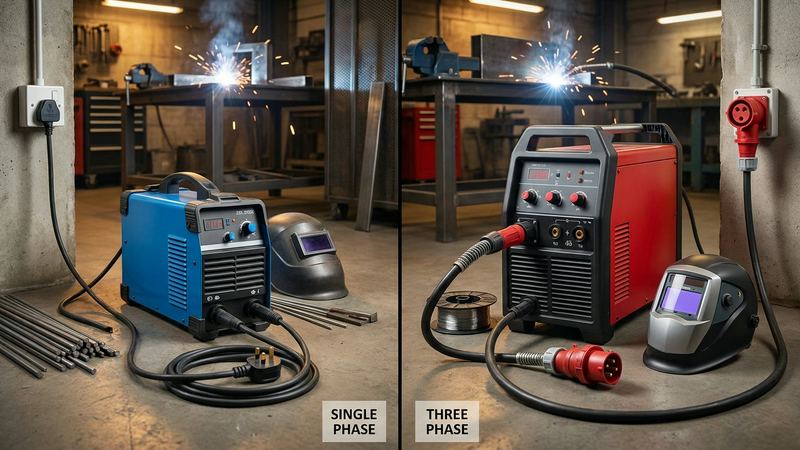
Single phase or three phase welder — what each gives you, what the real output limits are on 13A and 16A supplies, and when three phase is genuinely necessary for trade welding.